

Planning a Mixed Filter Container: Cartridges, Spin-Ons and Assemblies
On a filter order, the freight line is often the second-largest number on the invoice — and the one least examined. A container loaded by chance can leave 20 per cent of its volume empty, and that empty space is paid for at the same rate as the filters inside it. This guide explains how cube utilisation really works, how to build a mix of cartridges, spin-on filters and assemblies that fills the box, and which packing and document decisions have to be made before the goods are ready rather than after.
- Why freight decides the landed cost
- Cube utilisation: what actually fills a container
- Mixing cartridges, spin-ons and assemblies
- Floor loading against palletised loading
- Export packing that survives the voyage
- The document set that travels with the load
- A planning sequence you can reuse
- Frequently asked questions
Why freight decides the landed cost
A filter is a small, light, low-unit-value item — which makes it unusually sensitive to transport cost. On a heavy machine part, freight is a rounding error; on a filter element it can approach or exceed the factory price. That is an argument for planning the shipment as carefully as the specification.
| Cost element | What drives it | What the buyer can influence |
|---|---|---|
| Goods value | Specification, media, quantity | Specification and order size |
| Freight | Volume, weight, mode, lane | Cube utilisation, mix, mode, timing |
| Packing | Carton strength, pallets, crates | Packing specification |
| Insurance | Goods value plus freight | Indirectly, through better packing |
| Duty and clearance | Classification, origin, value declared | Correct classification and documentation |
| Inland delivery | Weight, pallet count, access | Pallet configuration and delivery terms |
Of those six, freight is the line with the largest gap between a good outcome and a lazy one — the same tonnage can leave a container 80 per cent full or 95 per cent full.
Cube utilisation: what actually fills a container
The practical starting point is the internal volume of the container, not the weight limit. A 20 ft general purpose container holds roughly 33 cbm, a 40 ft roughly 67 cbm and a 40 ft high cube roughly 76 cbm. Their payload limits are in the region of 28 tonnes and 26 tonnes respectively.
Filter cargo almost always runs out of volume long before it runs out of weight — unless the order is dominated by heavy spin-on canisters.
| Product form | How it packs | Cube behaviour |
|---|---|---|
| Cartridge elements | Light, bulky, usually rectangular cartons | Responds very well to careful carton sizing; the highest cube gains are here |
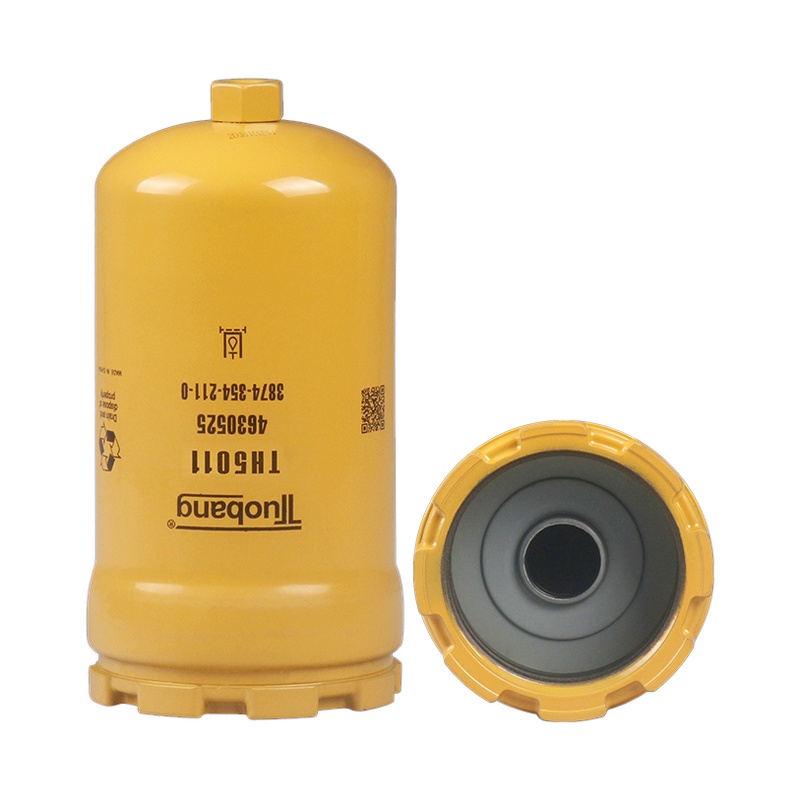
| Spin-on filters | Cylinders, heavier per unit | Leaves void space unless cartons are sized to the can diameter |
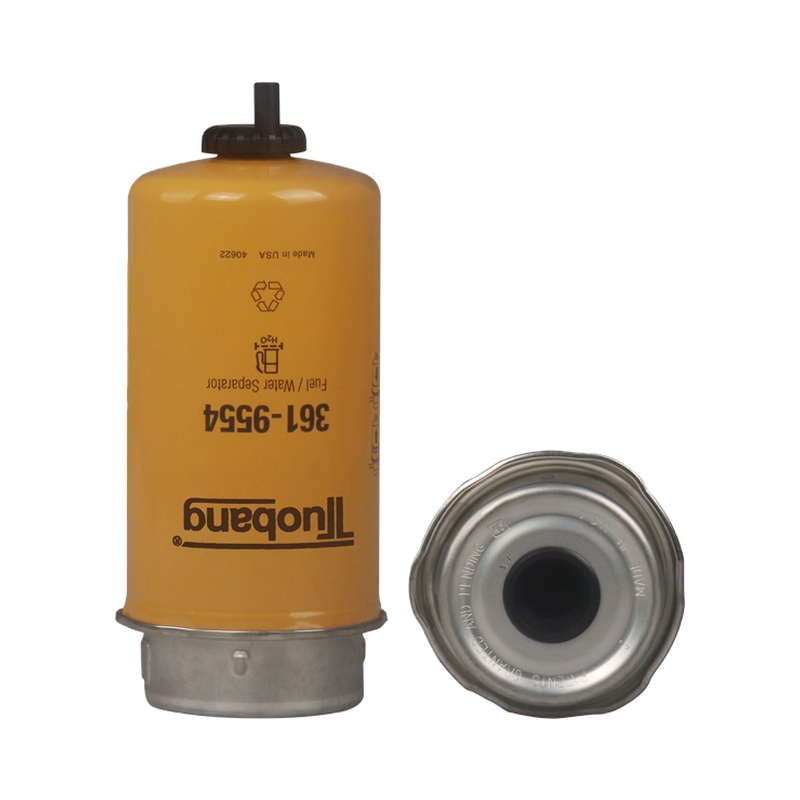
| Fuel-water separators | Cartridges plus bowls and drain fittings | Mixed shapes; benefits from combining into one carton size |
| Bases, housings and assemblies | Irregular, often the bulkiest items | Usually the volume driver; place them first and fill around them |
Mixing cartridges, spin-ons and assemblies
A mixed container is normal on a filter order — a dealer network needs several product families at once. The planning question is the order in which the mix is assembled.
- Place the bulkiest items first. Bases, housings and assemblies are the least forgiving shapes. If they are planned last, everything around them has to be re-planned.
- Group by carton size, not by product family. Two products that share an outer carton dimension can be stacked to the roof without a step. Two that do not will leave a gap at the top of the stack.
- Keep a single part number in a single layer where you can. It makes the unloading plan match the loading plan and reduces mix-ups at the destination warehouse.
- Reserve the door end for the items that unload first. On a mixed load, the last thing loaded is the first thing out, so the facility that needs stock earliest should be at the door.
- Leave a deliberate margin. A load planned to a theoretical 100 per cent will not close in practice.
Floor loading against palletised loading
This is the single most consequential choice after the mix itself — and it is usually decided by habit rather than by arithmetic.
| Method | Volume penalty | Best suited to |
|---|---|---|
| Floor loaded, hand stacked | Lowest; the container itself is the outer package | Large single-carton orders and full container loads |
| Slip sheets | Small penalty, still needs handling equipment at destination | Buyers whose warehouse has a clamp or slip-sheet attachment |
| Pallets, 1,200 x 1,000 mm | Typically 10 to 15 per cent of usable volume | Mixed loads and buyers who unload by fork lift |
| Pallets, 1,200 x 800 mm | Same order of penalty, better fit across the container width | European destinations |
The decision turns on the receiving end, not the shipping end. Floor loading is cheaper to ship and more expensive to handle, so if the destination cannot unload it efficiently, the volume penalty on pallets is normally worth paying.
Export packing that survives the voyage
A filter shipment crosses a long supply chain of forklifts, cranes and container floors before it reaches a warehouse shelf. Packing has to survive all of them — while occupying as little volume as possible.
- Inner protection. Cartridge elements are crushed by edge loading rather than by weight, so corner protection matters more than extra wall thickness.
- Moisture. Sea freight crosses climates. Adequate inner lining and desiccant protection prevent the media from arriving soft or mouldy.
- Wood packaging. Wooden crates and pallets are subject to the international wood-packaging treatment requirement known as ISPM 15, and must carry the treatment mark. Untreated wood is a common reason for a shipment to be held at the border, and the demurrage costs more than the crate ever saved.
- Crate overkill. A full export crate on cargo that can travel in a well-specified carton adds volume, weight and cost without adding protection.
Sea freight is the normal mode for filter orders, and it is the mode where packing earns its place. Air freight changes the arithmetic entirely — the volume penalty matters less and the weight penalty matters much more, so air is reserved for urgent lines rather than for volume.
The document set that travels with the load
Documents are part of the cube — a shipment that is held is a shipment that is not selling. The set below is the minimum for a filter order into most markets.
| Document | What it does |
|---|---|
| Commercial invoice | States value, terms and origin of the goods |
| Packing list | Carton count, weights, dimensions and part numbers per carton |
| Bill of lading | Carrier's receipt and the contract of carriage |
| Certificate of origin | Supports preferential duty treatment where an agreement applies |
| Fumigation or treatment certificate | Evidence that wood packaging complies with the treatment requirement |
| Specification sheet per part number | Lets the receiving warehouse verify the delivery against what was ordered |
The packing list deserves more attention than it usually receives. If it lists cartons by count and weight without part numbers, a mixed container cannot be reconciled without opening every carton.
A planning sequence you can reuse
- Fix the part numbers and quantities per market first. The mix follows the sales plan, not the other way round.
- Get carton dimensions for every line. If a carton size is not yet decided, decide it now rather than after production.
- Calculate volume, then weight. Confirm which limit binds before choosing the container size.
- Choose the container and the loading method together. Changing one after the other is fixed wastes the plan.
- Check the LCL and FCL options against each other. The break-even between the two commonly falls between 13 and 15 cbm depending on the lane, and fixed charges dominate small LCL shipments.
- Review the loading plan on paper, then ask for loading photographs. Photographs are cheap evidence and settle most disputes before they start.
- Confirm the document set and the Incoterm before booking. FOB, CIF, DDU and DDP distribute cost and risk between buyer and seller very differently, and the choice affects how the packing decision is made.
Frequently asked questions
Is a full container always cheaper than LCL once volume grows?
Usually, but the crossover depends on the lane and on the fixed charges at both ends. LCL is charged partly per cubic metre and partly as fixed fees, so the fixed element makes small shipments disproportionately expensive.
Should filters be floor loaded or palletised?
Decide it by how the goods will be received. Floor loading pays a lower freight cost and a higher handling cost; palletising reverses that. If the destination cannot unload a floor-loaded container efficiently, the 10 to 15 per cent volume penalty on pallets is normally the better trade.
How much volume should a loading plan allow for?
Plan to a realistic utilisation rather than a theoretical one, because cartons do not tessellate perfectly. Plan to a figure you have actually achieved before, and treat the difference as margin rather than as waste.
What packing information should be requested with a quotation?
Carton dimensions and weight per part number, units per carton, the pallet configuration if pallets are used, and whether wood packaging is treated to the international requirement. Without those four, a freight quotation is an estimate rather than a number.
Plan the container with the factory, not after it
Bengbu Bowei Filter Co., Ltd. manufactures oil filters, diesel filters, air filters, fuel-water separators, filter bases, housings and assemblies for construction, mining, oilfield and port machinery, diesel generator sets, heavy-duty vehicles and buses. Send us your part numbers and destination and we will return carton dimensions, packing options and a loading plan alongside the quotation.