
Spare Parts Strategy for a Filter Dealer: Which Part Numbers to Hold
Every filter catalogue contains more part numbers than any single warehouse should carry. The skill is not in holding everything, it is in deciding which numbers earn shelf space, which are held as data rather than as stock, and how much of each to hold for a market you are still learning. This guide sets out a stocking framework that a dealer, a machinery parts supplier or a maintenance company can apply to an existing list or to a first order.
The two costs a stocking list has to balance
A spare parts list is a bet on the future — and it has two failure modes. Hold too little and a machine stands idle waiting for a filter that costs a fraction of the lost working day. Hold too much and capital sits on a shelf turning into obsolete stock as the equipment it fits leaves the fleet.
| Failure mode | What it costs | Who feels it first |
|---|---|---|
| Stockout on a running line | Downtime, expedited freight, a customer who finds another supplier | Your customer, then you |
| Overstock on a slow line | Tied-up capital, shelf space, eventual write-off | You |
| Wrong part held | The cost of both, at the same time | You, and the customer who is still waiting |
The third row is the one that gets overlooked. A warehouse full of the wrong part number feels like coverage but behaves like a stockout — and it delays the decision to hold the right one. That is why the split below comes before any question about quantities.
Split the catalogue three ways
A useful starting point is to divide the catalogue by movement rather than by product family. Most filter ranges fall into three groups that need completely different treatment.
- Movers. Numbers that leave the warehouse every month. These are the ones a stockout is most expensive on, and they justify continuous stock.
- Slow movers. Numbers that move a few times a year. These justify a single unit on the shelf or none at all, but they absolutely justify accurate reference data.
- Specials. Numbers tied to a small installed population, a discontinued machine or a single large customer. Hold these on demand only.
The fast-moving core worth holding
For most machinery markets, the fast-moving core is defined by the equipment in the field rather than by the catalogue. Filters for the common engine families, the common hydraulic circuits and the common fuel systems on the machines that dominate the local fleet will account for most of the turnover, and they are worth holding in depth.
Three things earn a number a place in the core:
- Frequency. It is consumed on a service interval short enough that the same number comes back month after month.
- Commonality. It fits several machines on the local fleet, which multiplies turnover without multiplying the number of SKUs.
- Criticality. The machine it protects cannot run without it, and the penalty for waiting is measured in days of production rather than in convenience.
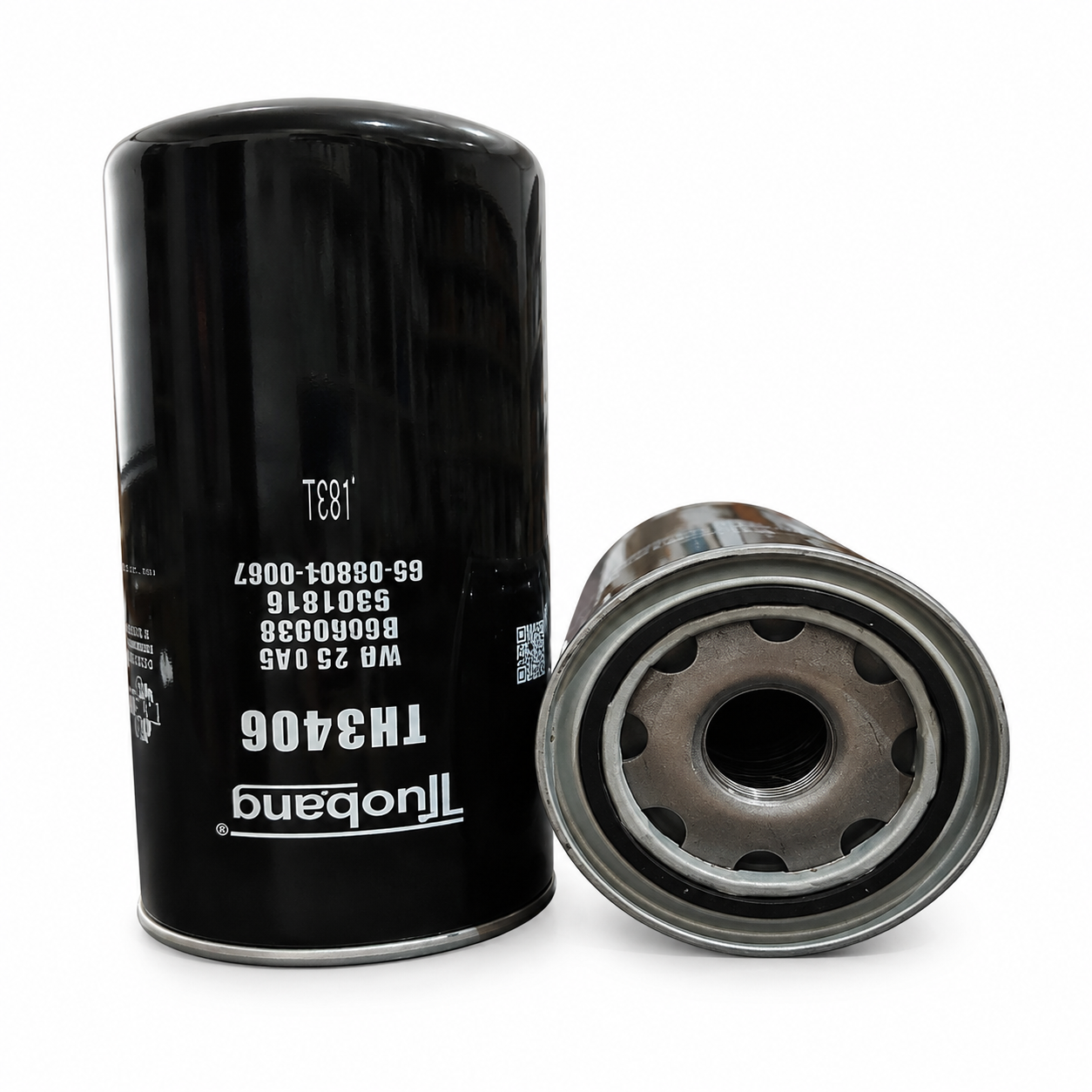
Filter families behave differently in the field — which is why the core is usually not evenly spread across the range. Oil and fuel filters are replaced on every service interval. Air filters are replaced less often but in larger numbers on dusty sites. Hydraulic filters move with the equipment's duty cycle rather than with the calendar, so their demand is lumpier and needs a wider safety margin.
Slow movers: hold the reference, not the stock
The largest saving on a parts list is usually not in the fast movers — it is in deciding not to hold the slow ones. That decision is only safe if the dealer can still answer the customer's question on the spot.
What has to be held for a slow mover is information, not inventory:
- The cross-reference. Which original equipment numbers the part replaces, so a counter enquiry can be answered without a stock check.
- The specification. Dimensions, thread, media and valve settings, so a substitution is a decision rather than a guess.
- The availability. A realistic restock time for the number, quoted to the customer honestly.
- The minimum. Whether the number can be ordered in a single unit or only in a pack, which changes how a special is handled commercially.
Sizing the first stock for a new market
A first stocking order in a new market is a forecast made with very little information — so it should be built from countable inputs rather than from optimism.
| Input | Where it comes from | Why it changes the answer |
|---|---|---|
| Installed population | Machine models active in the market, by count | Demand is driven by machines, not by the catalogue |
| Service interval | Manufacturer schedule for each model | Turns a machine count into a units-per-year figure |
| Filters per service | Circuit diagram for the machine | A single service may consume one oil filter and two hydraulic filters |
| Serviced share | Proportion of the fleet maintained by your customers rather than in-house | Not every machine in the market is addressable demand |
| Seasonality | Construction, harvest or haulage cycles | Shifts stock from an average figure to a peak figure |
Multiplied together, those five inputs give an annual demand estimate per number. The stocking quantity then follows from the restock time rather than from the annual total, using a simple reorder point:
A first order should also be deliberately unbalanced. Load the fast-moving core deep enough to cover a full restock cycle, and treat everything else as a sample quantity that proves the demand before it is funded.
A review cycle that keeps the list honest
A stocking list that is never reviewed becomes a museum. A short quarterly review is enough to keep it in shape, provided it asks the same four questions every time.
- What moved and what did not? Any number with no movement across the review period drops a class.
- What is about to be stranded? Machines leaving the local fleet take their part numbers out of demand, and that is visible in the enquiry pattern before it is visible in the sales.
- What did we substitute? Every substitution recorded at the counter is evidence that a reference belongs in the fast list, or that a number can be deleted.
- What did we expedite? Every air-freighted emergency is a stockout that was not planned for — and it is the best evidence available for adjusting a reorder point.
Run those four questions honestly and the list becomes smaller and more profitable at the same time — which is not the usual outcome of a review that starts from what is already on the shelf.
Frequently asked questions
How many part numbers should a new dealer stock?
Fewer than the catalogue and fewer than feels comfortable. Start with the numbers that fit the machines your customers actually run, hold them deep enough to cover a restock cycle, and add numbers as enquiries prove demand. A wide, thin stock list is the most common and most expensive first mistake.
Should a dealer stock complete filter assemblies or elements only?
It depends on how the equipment is maintained locally. If customers replace complete housings on site, assemblies belong in stock. If they rebuild, elements and seals are the faster-moving items and the housing is a slow mover held as a reference.
How much safety stock is reasonable?
Enough to cover the variability in demand across a restock period, not enough to cover the worst month in history. Numbers consumed steadily need very little; numbers consumed in seasonal bursts need more. Pricing the safety margin against the cost of a stockout, rather than against a fixed percentage, usually produces a smaller and more defensible figure.
What information should accompany each part number in the warehouse system?
At minimum: the original equipment numbers it replaces, its dimensions and thread, its media and micron rating, its valve settings, the filter types it is often confused with, and a realistic restock time. That dataset is what makes a counter sale possible without stock on the shelf.
Build the first stock list with the factory
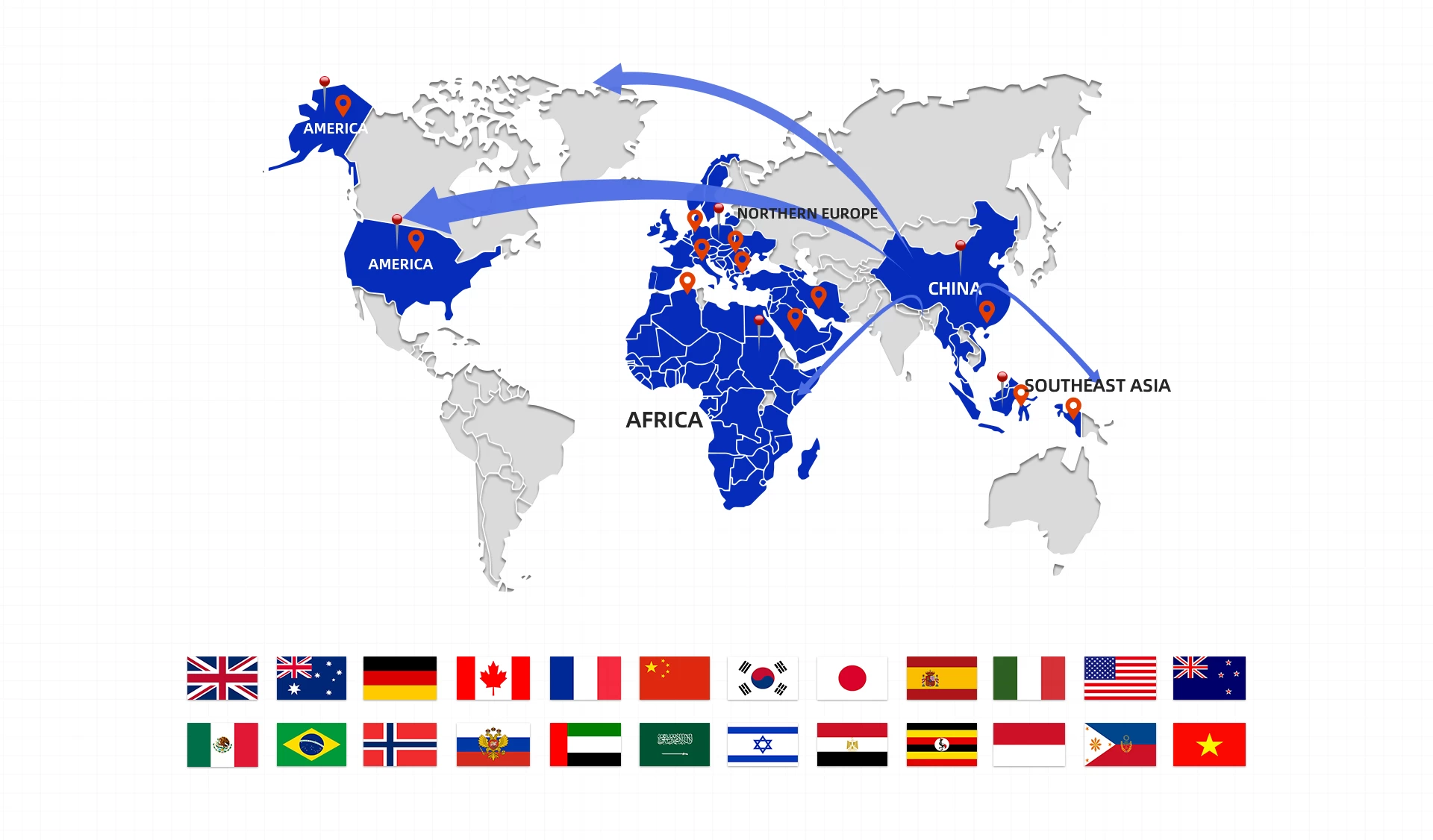
Bengbu Bowei Filter Co., Ltd. produces oil filters, diesel filters, air filters, fuel-water separators, filter bases, housings and assemblies for construction, mining, oilfield and port machinery, diesel generator sets, heavy-duty vehicles, buses and other power equipment, and supplies dealers and parts distributors in more than 40 countries. Send us the equipment models you serve and we will map them to part numbers with the specifications and cross-references you need to stock them.